Flat Clearance Temple — Recycling and Sustainability
 At Flat Clearance Temple we place sustainability at the heart of every job. Our Temple flat clearance teams work to minimise landfill, maximise reuse and support the boroughs' waste separation schemes. This page explains our eco-friendly waste disposal area approach, our recycling percentage target and how our operations align with local collection methods and civic responsibilities. We describe how a Temple flat clearance service can be both efficient and environmentally responsible.
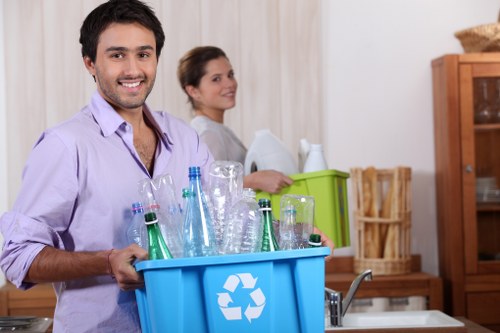
Our operational philosophy is simple: remove clutter, preserve value and reduce carbon. We commit to sorting items on-site wherever possible, separating recyclables such as paper and cardboard, glass, metals and rigid plastics from general waste. We also separate electronic waste and textiles for specialist processing, reflecting the boroughs' approach to waste separation and the increasing drive for kerbside food and garden waste collections.
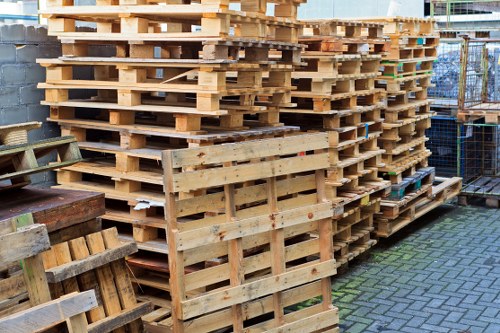 Across the Temple and surrounding boroughs, municipal waste teams encourage residents to source-separate streams. As a dedicated flat-clearance Temple service we complement that by preparing materials for the correct local transfer stations and civic amenity sites. Our sorting process reduces contamination rates, improves recoverability and supports the local circular economy.
We have set a clear recycling percentage target: a minimum of 80% diversion from landfill on all clearances by 2028. This is an ambitious, measurable goal that covers reuse, recycling and recovery routes. It means that the majority of materials collected during a Temple flat clearance are either rehomed through charities, sold for reuse or processed at certified recycling facilities rather than being sent to landfill or incineration without energy recovery.
 To reach this target we operate a tiered waste-exchange system. First, we identify and list items suitable for immediate reuse. Second, we segregate materials for recycling — paper/cardboard, glass bottles and jars, aluminum and steel cans, mixed plastics marked accepted by local authorities, and soft furnishings for specialist processing. Third, we route non-recyclable residues to accredited facilities with energy recovery where possible, ensuring a low-carbon disposal footprint.
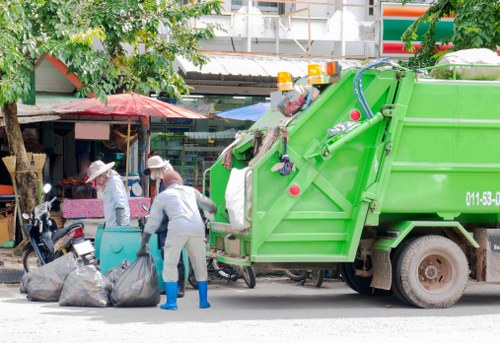
Our sustainable flat clearance Temple process also relies on local transfer stations and civic amenity sites. We make use of authorized transfer stations near central London and the Temple area that accept mixed salvage, electricals and bulky waste. By delivering to the correct facility we avoid double handling, reduce transport mileage and ensure proper documentation for each waste stream.
 Partnerships with charities are central to our rehoming strategy. We work closely with local and national organisations such as Emmaus, independent furniture re-use groups and community charities that serve the homeless and vulnerable. When items are suitable for reuse — furniture, working appliances, books and soft furnishings in good condition — we prioritise donation over sale. This supports social value in Temple communities while increasing our reuse rate.
We run scheduled collections for textiles and electricals destined for specialist charity partners and reuse organisations. Our teams follow a strict triage protocol: items that are repairable are sent to social enterprises for refurbishment; items beyond repair are directed to certified recyclers who recover raw materials. This prioritises circular economy outcomes and increases the percentage of materials kept out of landfill.
 Transport is another area where we lower environmental impact. Our fleet of low-carbon vans includes electric and plug-in hybrid vehicles for inner-city runs and Euro 6-compliant vehicles for longer transfers. The use of low-emission vans reduces urban NOx and particulate emissions and lowers overall fleet carbon intensity. Vehicle routing is optimised to consolidate trips, reduce empty miles and minimise congestion during peak hours.
Operational transparency matters: for every clearance we provide an environmental summary that outlines the percentage of items donated, recycled and sent for recovery. We track material flows and report on cumulative progress toward our recycling percentage target. This strengthens accountability and helps clients understand the environmental outcome of their Temple flat clearances.
How we support borough-level recycling efforts
We integrate with local collection policies by preparing materials to meet borough standards — for example, segregating glass, cans and certain plastics, bagging paper and cardboard separately and removing contaminants from textiles. Our teams are trained to follow the different rules that apply across neighbouring boroughs so that transfer destinations accept the material and recycling rates remain high.Practical commitments and services
In practice, our sustainability offering includes:- On-site segregation to maximise reuse and recycling.
- Direct donations to partnered charities and social enterprises.
- Routes to accredited transfer stations and licensed processors.
- Low-carbon transport options and efficient routing.
- Transparent reporting and a measurable recycling percentage target.
Through these steps, our flat-clearance Temple operations aim to be a model of sustainable rubbish area management in the city — balancing the immediate needs of clients with long-term environmental goals.
Final note: sustainability is an ongoing programme, not a single task. By choosing a sustainable flat clearance in Temple you help fund charity partnerships, reduce landfill and lower transport emissions. Our multi-pronged approach — donor networks, local transfer stations, low-carbon vans and a published 80% recycling percentage target — ensures practical, verifiable improvements to the way waste is handled in Temple and nearby boroughs.
We continue to refine our methods, seek new charity partners, and expand our fleet of low-emission vans to keep pace with best practice. If you value an environmentally responsible flat clearance service in the Temple area, our processes are designed to deliver measurable results while supporting local reuse and recycling ecosystems.