Health and Safety Policy — Flat Clearance Temple
 Policy statement: This Health and Safety policy outlines the commitment of Flat Clearance Temple and its flat clearance services to provide a safe working environment for employees, contractors and the public. Flat clearance operations, rubbish removal and waste handling will be carried out with careful planning, competent supervision and practical control measures to minimise risk. The organisation recognises that accidents, injury and ill health are preventable through robust procedures, training and continual review.
Scope: This policy applies to all activities undertaken by our rubbish removal team and associated staff while delivering flat clearance services. It covers manual handling, hazardous materials, handling bulky items, vehicle loading and unloading, use of tools and equipment, site access and housekeeping. The policy is designed to be proportionate and practical for apartment and flat clearance projects of varying sizes and complexities. It is the responsibility of all personnel to understand and follow the measures contained herein.

Responsibilities and accountability
The management team holds overall responsibility for health and safety and will ensure adequate resources are allocated. Supervisors are responsible for implementing risk controls and ensuring compliance on site. Employees and operatives must comply with safe systems of work, report hazards promptly and use provided protective equipment. Key roles include designated safety lead, vehicle operators and trained clearance operatives.Risk assessment and control measures
All clearance jobs will begin with a site-specific risk assessment to identify foreseeable hazards. Assessments will consider waste types, access limitations, structural constraints and potential for hazardous materials such as asbestos, sharps or chemical containers. Control measures will be proportionate and may include exclusion zones, signage, mechanical aids, and safe lifting procedures. The assessment will be recorded and communicated to the team before work starts.Safe systems and procedures
Work plans and method statements will set out safe systems of work for routine tasks and higher-risk activities. These documents will include the sequence of operations, PPE requirements, tool checks, permitted weights for manual handling and protocols for dealing with unknown hazards. Procedures will emphasise teamwork, clear communication and the need to stop work if a new risk is identified.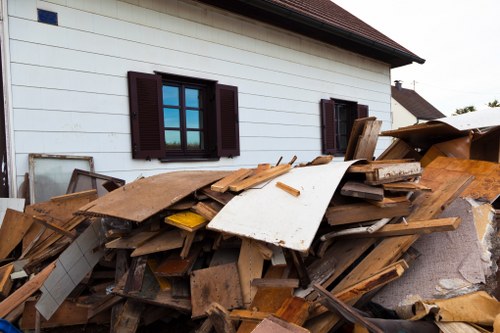 Personal protective equipment (PPE) and training Appropriate PPE such as gloves, eye protection, high-visibility clothing, protective footwear and respiratory protection where needed will be provided and maintained. Training will be provided for manual handling, safe use of equipment, and awareness of hazardous materials. Refresher training will be scheduled periodically and after any incident that reveals gaps in knowledge or practice. Employees are expected to wear assigned PPE and report defective equipment.
Equipment, vehicles and maintenance
Tools, lifting equipment and vehicles used by our flat clearance teams will be inspected and maintained according to manufacturer guidance and statutory inspection regimes where applicable. Daily pre-use checks will be completed and defects reported. Load securing, vehicle weights and safe loading practices are integral to preventing road and site incidents during rubbish collection and transport.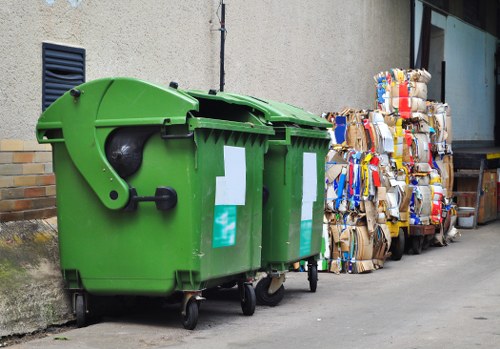
Waste handling, segregation and disposal
Waste will be segregated at source where reasonably practicable into recyclable materials, general refuse and hazardous items. Any identified hazardous waste will be isolated, clearly labelled and handled only by trained personnel or disposed of via licensed contractors. Records of waste types and disposal routes will be maintained to ensure legal compliance and environmental responsibility.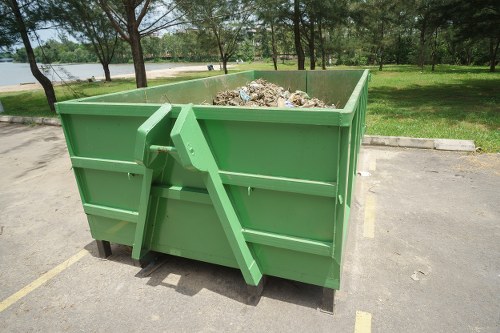 Emergency procedures and first aid Clear emergency arrangements will be in place for incidents such as injury, fire, hazardous material release or structural collapse. Emergency contact lists, first aid kits and trained first aiders will be provided at operational bases. Where necessary, evacuation routes and muster points will be identified and communicated to the team prior to starting work. Incidents and near misses will be reported and investigated to identify root causes and corrective actions.
Monitoring, review and continuous improvement: The effectiveness of this policy and associated controls will be monitored through routine site inspections, audits, incident analysis and workforce feedback. Performance indicators, such as the number of lost-time incidents, near-miss reports and training completion rates, will be reviewed by management. The policy will be updated as needed following legislative changes, significant incidents or changes in operational practice.
Record-keeping and documentation
Comprehensive records will be kept for risk assessments, training, equipment inspections, incident reports and waste disposal documentation. These records support ongoing compliance, enable trend analysis and ensure traceability of decisions and actions taken. Documentation will be stored securely and made available to authorised personnel for review.Commitment: Flat Clearance Temple is committed to maintaining a culture of safety and responsibility across its flat clearance services and rubbish company operations. All staff will be empowered to raise concerns and suggest improvements. By following this Health and Safety policy, we aim to protect people, property and the environment while delivering reliable and responsible clearance services.